In an ancient Spanish ritual, men dressed as 'the Devil' leap over babies born during the previous year to cleanse them of original sin. ✨🎉
Thousands of locals and tourists gather for this unique centuries-old tradition.
El Colacho in Spain: A Leap of Faith and Tradition
In the heart of Spain's Castilla y León region, the small village of Castrillo de Murcia hosts one of Europe's most peculiar and captivating traditions: El Colacho, often known as the Baby Jumping Festival.
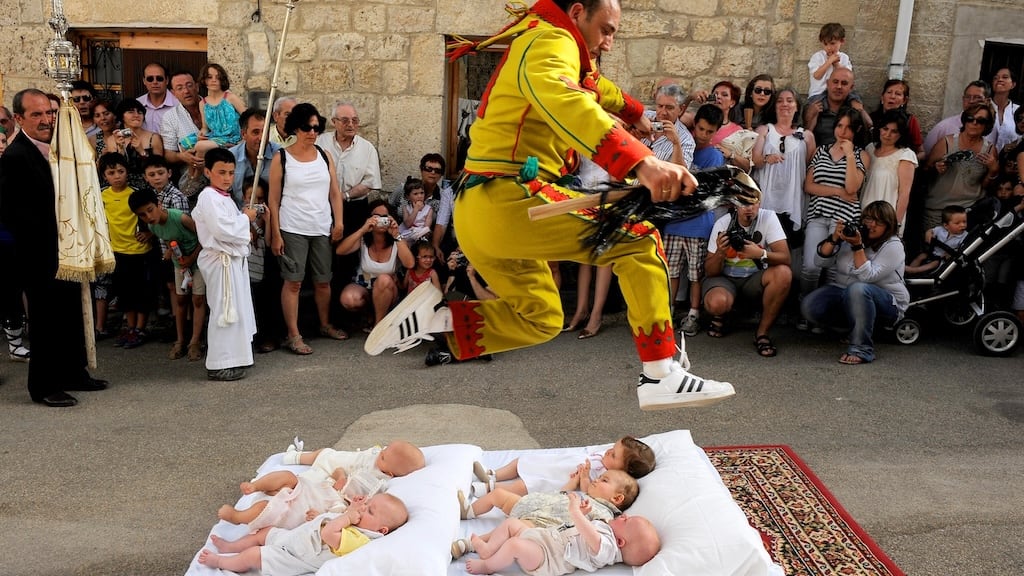
This centuries-old ritual, deeply rooted in local culture and religious belief, sees men dressed as "devils" leaping over rows of infants laid on mattresses in the streets. Far from being a mere spectacle, El Colacho is a profound act believed to cleanse babies of original sin and protect them from evil spirits and illness, drawing thousands of curious onlookers and participants each year.
Historical Background of El Colacho
The origins of El Colacho trace back to the early 17th century, with records indicating its continuous celebration since at least 1620 or 1621. This unique tradition is intertwined with the Catholic Feast of Corpus Christi, a movable feast that typically falls in June.
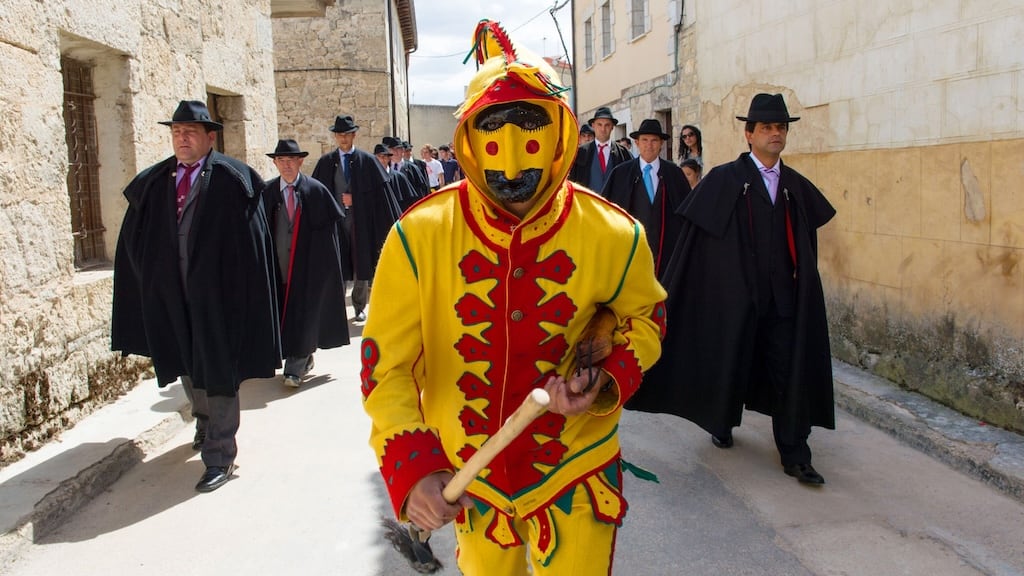
While the exact genesis remains somewhat shrouded in mystery, it is widely understood as a blend of ancient pagan purification rites and Catholic symbolism, aiming to ward off malevolent forces. The central figure, "El Colacho," represents the devil, and his dramatic leap symbolizes the triumph of good over evil, expelling sin and misfortune from the newborns.
Typical Activities and Celebrations
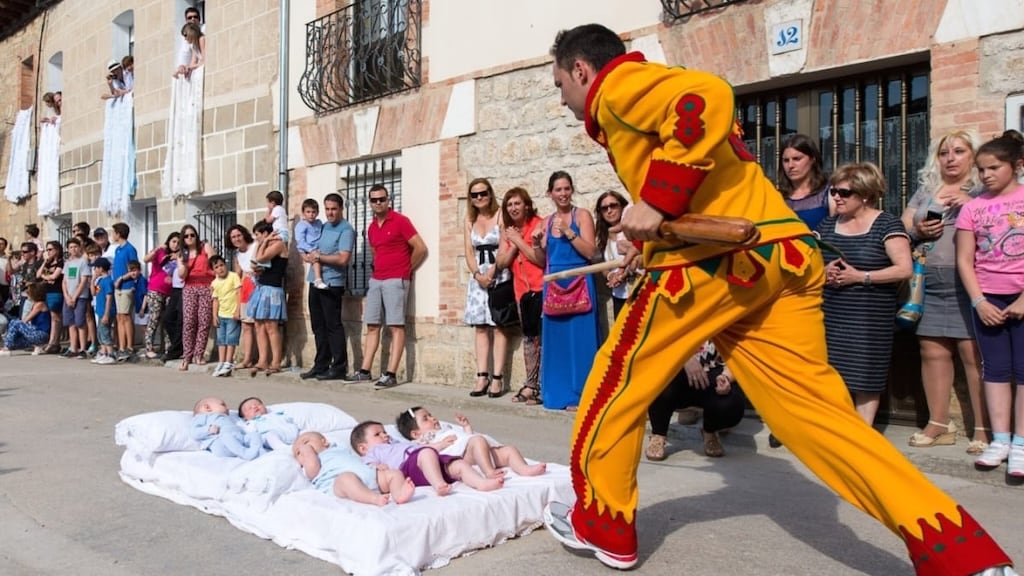
The main event of El Colacho, the baby jumping itself, is the culmination of a week-long series of festivities organized by the Brotherhood of Santísimo Sacramento de Minerva. The celebrations begin with a solemn procession to the parish church, where El Colacho and the "atabalero" (drummer) play a prominent role. Throughout the week, the "devils," clad in vibrant red and yellow costumes with grotesque masks, roam the streets, playfully chasing and whipping villagers who gleefully taunt them. This playful interaction builds anticipation for the main event.
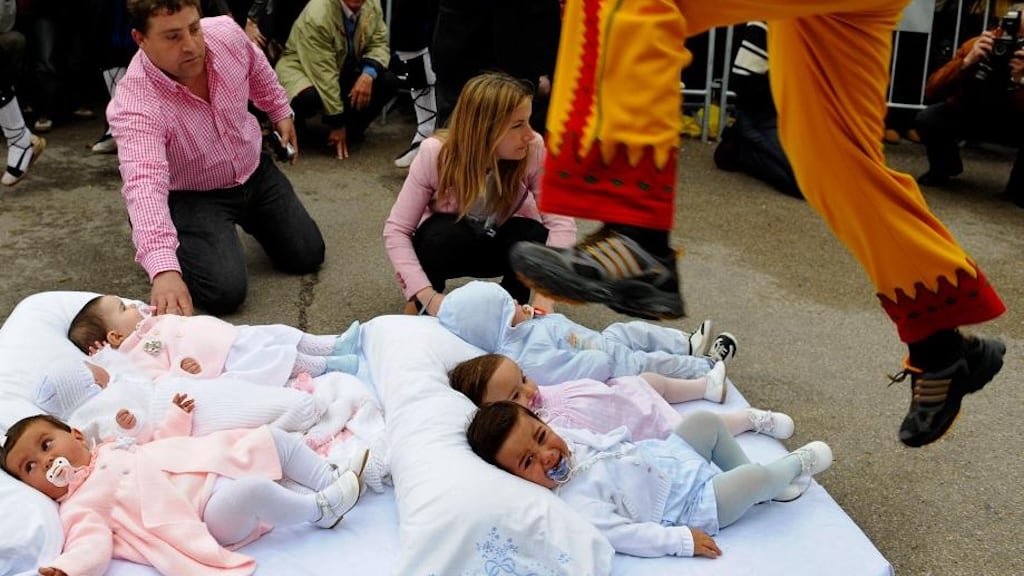
On the Sunday following Corpus Christi, the village transforms into a stage for the dramatic ritual. Parents from Castrillo de Murcia and surrounding areas bring their babies, typically those born in the preceding twelve months, to be laid on mattresses placed along the streets. As the crowd watches with a mix of awe and apprehension, El Colacho takes a running start and leaps cleanly over the infants, a symbolic act of purification and protection.
Traditional Customs and Cultural Significance
Beyond the dramatic jump, El Colacho is rich in traditional customs. The "Colacho" costume itself, with its striking colors and mask, is a powerful visual representation of the devil figure. The accompanying music, often featuring drums and castanets, adds to the festive and somewhat eerie atmosphere. After the babies are "cleansed" by the jump, they are often showered with flower petals, symbolizing blessings and a fresh start.
Despite its deep cultural roots and local significance, El Colacho has faced scrutiny, particularly from the Catholic Church. The Church maintains that baptism is the sole sacrament for cleansing original sin and has encouraged priests and parishioners to distance themselves from the practice. However, the tradition persists, cherished by the community as a vital part of their heritage and a powerful expression of communal identity and faith. It is a testament to the enduring power of local traditions, even when they stand apart from broader religious doctrines.
What to Expect as a Visitor
For visitors to El Colacho, the experience is truly unforgettable. The festival offers a vibrant street fair atmosphere, brimming with music, local food, and lively entertainment throughout the week. Castrillo de Murcia, a small village, becomes a bustling hub, drawing international attention. While the main event is the baby jumping, visitors can also enjoy the processions, the playful interactions with the "devils," and the general celebratory mood.
It's advisable to arrive early to secure a good viewing spot for the main event. The village is located near Burgos, a historic city in Spain, offering additional attractions for travelers. Accommodation can be found in Burgos or nearby towns, as Castrillo de Murcia itself has limited options. The festival is a unique opportunity to witness a living piece of Spanish history and culture.
Conclusion
El Colacho is more than just a festival; it is a profound cultural phenomenon that embodies centuries of tradition, belief, and community spirit in Castrillo de Murcia. The sight of the "devil" leaping over infants is a powerful and unforgettable image, symbolizing protection and renewal. While it may appear unusual to outsiders, for the local community, it is a cherished annual event that reinforces their heritage and brings people together.
It stands as a vibrant example of Europe's diverse and unique cultural tapestry, inviting those seeking an extraordinary experience to witness this remarkable leap of faith. For more information on the region, you can visit the official tourism portal of Castilla y León.