Did you know that during the Midsummer Festival, Swedes dance around a maypole singing the traditional 'Little Frog' song?
Midsummer Festival in Sweden: A Festival of Light, Joy, and Tradition
Welcome to the magical realm of Sweden's Midsummer Festival, an ancient celebration that comes alive every June. This event, deeply ingrained in Swedish culture, is a joyous tribute to the longest day of the year.
Approaching the summer solstice (opens in a new tab), Swedes flock in droves to pay respects to nature's bounty, revel in traditional customs, and bask in the warmth of the sun. More than just a festive event, the Midsummer Festival is a well-loved tradition imbued with the very spirit of Sweden.
Historical Background
The Midsummer Festival, or "Midsommar" in Swedish, has its roots in the distant past when pagan rituals honored the solstice and the life-giving sun. Originally, Midsommar marked the midpoint of the growing season, a time to thank the gods for a bountiful harvest and seek their favor for the months ahead. Over the centuries, the festival evolved, blending pagan traditions with Christian elements (opens in a new tab).
Until 1952, Midsummer Eve was celebrated on June 23; in 1953, it moved to the nearest Friday to fit the working week. Today, Midsummer Eve falls on a Friday between June 19 and 25, followed by Midsummer Day on Saturday. Greats like poet Carl Michael Bellman (opens in a new tab) and artist Anders Zorn (opens in a new tab) have captured the eternal allure of Midsummer in their works, further sealing its place in Swedish heritage.
Typical Activities
Midsummer in Sweden is a lively thing, full of activities that make it quite different from other European festivals. The central feature is the raising of the maypole, or "midsommarstång," which is decorated with flowers and greenery. People will sing traditional songs while dancing in circles around the maypole with their families and friends.
Another highlight is the Midsummer feast, with tables groaning under herring, new potatoes, sour cream, chives, and strawberries. It is a time when Swedes can really let go and enjoy good food with the people they love. Lawn games like Kubb (opens in a new tab) and tug-of-war are very common during the day, which really adds to the fun of the occasion.
Traditional Customs
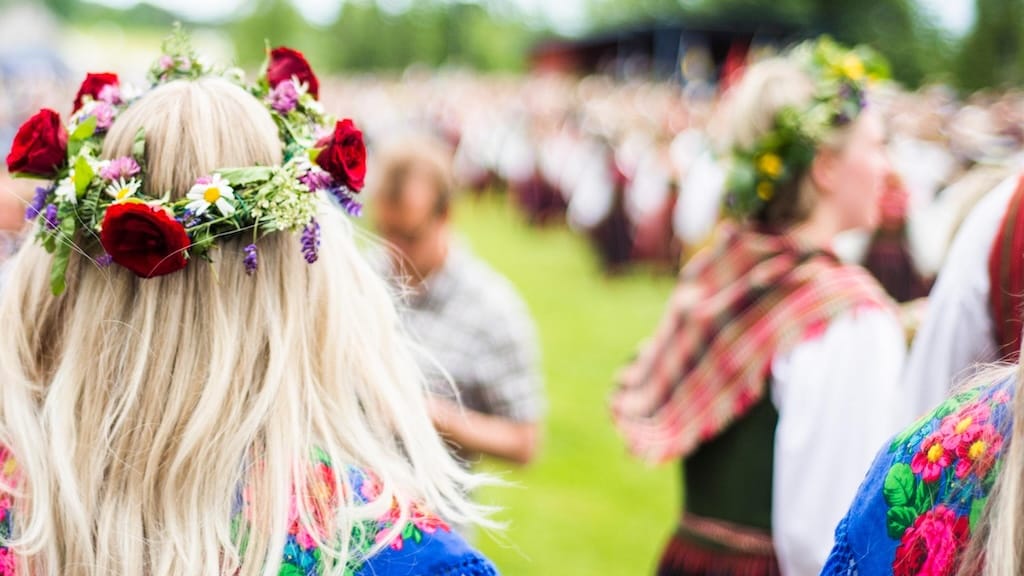
Midsummer customs are a captivating blend of ancient rites and modern-day practices. Among the necessary accessories are flower crowns, or "kransar," which symbolize the beauty and fertility of nature. Participants usually make these crowns themselves with flowers and herbs collected from the meadows.
Music and dance are an important part of the festival; traditional folk songs are sung. Probably the most well-known is the "Små grodorna (opens in a new tab)" (The Little Frogs) dance, especially among children. It is a funny dance in which the dancers jump around the maypole just like frogs while singing a song with a catchy tune.
Midsummer has a special place in Swedish folklore (opens in a new tab), with stories of supernatural beings and love charms. Legend has it that if you pick seven different flowers and put them under your pillow on Midsummer's Eve, you will dream of your future spouse.
What to Expect
In 2027, Midsummer Eve is Friday, June 25, followed by Midsummer Day on Saturday, June 26. Midsummer Eve falls on a Friday between June 19 and 25 each year. While the whole country celebrates it, some of the most picturesque locations include Stockholm (opens in a new tab), the island of Gotland (opens in a new tab), and the province of Dalarna (opens in a new tab).
First-time visitors are also cautioned to dress in layers, as the weather can be quite unpredictable, and not forgetting mosquito repellent for outdoor festivities. Accommodations can fill up quickly, so it is wise to book in advance. Many visitors also take the opportunity to explore Sweden's natural beauty, from its stunning archipelagos (opens in a new tab) to its serene forests.
Conclusion
More than a seasonal celebration, the Midsummer Festival in Sweden is a living outburst of the nation's cultural legacy. From its rich historical roots to its lively modern-day festivities, Midsummer gives a glimpse of the very heart and soul of Sweden.
Be it dancing around the maypole, feasting on traditional delicacies, or just basking in the light from the long days, Midsummer is an experience which stays with a person long after the sun has set.
You'll find all the quintessential charms of Midsummer and see why it is so dear to the Swedish heart. Let Midsummer's festive spirit capture your heart and enthrall you into celebrating the beauty of nature and life in true Swedish tradition.
Public holidays around the festival
Public and bank holidays in Sweden from 3 days before to 3 days after the festival ().
- Midsummer Evemidsommarafton
In 7 months - Midsummer Daymidsommardagen
In 7 months
Editions
- 2027In 7 months
- 2026Past
- 2025Past