The Paris Air Show is the world's oldest and largest aerospace event, first held in 1909. ✈️🚀
Hundreds of thousands of industry professionals and public visitors attend each edition.
Where the Future of Flight Takes Wing
Every two years, the historic tarmac of Paris-Le Bourget Airport transforms into the global epicenter of aerospace ambition. The air crackles with a unique energy—a blend of thunderous afterburners, the quiet hum of high-stakes negotiations, and the collective awe of hundreds of thousands of visitors. This is the International Paris Air Show, the world's oldest, largest, and most influential event dedicated to the aviation and space industry.
Organized by SIAE, a subsidiary of the French Aerospace Industries Association (GIFAS), the show is a spectacle of immense proportions, embodying both a critical marketplace for global commerce and a breathtaking public exhibition that inspires future generations. The Paris Air Show in France is more than an exhibition; it is a biennial pilgrimage for professionals and enthusiasts alike, a place where the trajectory of human flight is charted. For anyone seeking to understand the industry's present or glimpse its future, all paths lead to Le Bourget.
Historical Background
The Paris Air Show's legacy is inextricably linked to the history of aviation itself. Its story begins in 1908, when a small section of the Paris Motor Show was first dedicated to the nascent field of "aerial locomotion." The overwhelming public interest led to the first dedicated Salon de la locomotion aérienne the following year at the magnificent Grand Palais, an event that drew 100,000 visitors and established Paris as the definitive center for aviation innovation. After interruptions by two World Wars, the show resumed, and in 1953, it made the pivotal move to its current home at Le Bourget Airport. This relocation was transformative, enabling the spectacular flying demonstrations that have become the event's hallmark. In the decades that followed, the show evolved into a key theater of the Cold War, a neutral ground where East and West showcased their technological prowess.
The 1967 show was a prime example, with French President Charles de Gaulle inspecting a Soviet Vostok rocket—the type that carried Yuri Gagarin into space—just a short walk from American astronauts and the revolutionary F-111 swing-wing bomber. This juxtaposition highlighted the show's unique role as a platform for geopolitical posturing, where national power was projected not through military conflict but through engineering supremacy. The tarmac at Le Bourget has served as the debut stage for some of history's most iconic aircraft. In 1969, the world watched as the supersonic Concorde made its first flight over the city, sharing the spotlight with the brand-new, colossal Boeing 747 and the actual, scorch-marked Apollo 8 command module. The 1970s saw the arrival of the Concorde's Soviet rival, the Tupolev Tu-144, and other giants like the Lockheed C-5A Galaxy. This tradition continues today, as the show has transitioned from celebrating speed and size to championing the next great leap in aviation: efficiency and sustainability.
Typical Activities
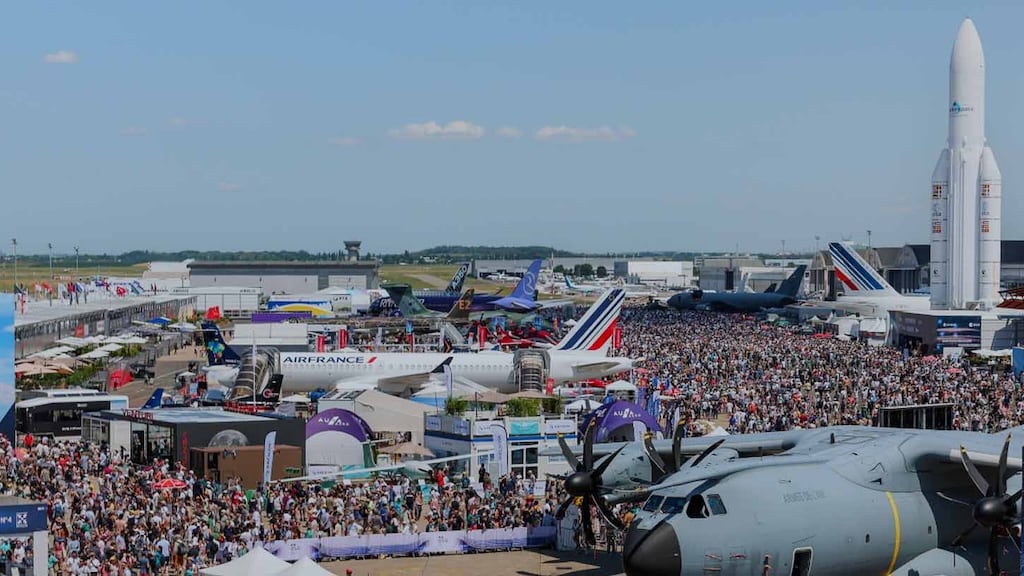
The week-long event is a whirlwind of activity, meticulously structured to serve its dual audience of industry insiders and the general public. The Top activities during Paris Air Show are a masterclass in industrial theater and public engagement, creating an unforgettable experience. The soul of the show is the daily flying display. Each afternoon, the skies above Le Bourget become a stage for the world's most advanced aircraft. Agile fighter jets like the Eurofighter Typhoon and Dassault Rafale perform breathtaking aerobatic maneuvers, while massive commercial airliners like the Airbus A350-1000 demonstrate surprising grace and power.
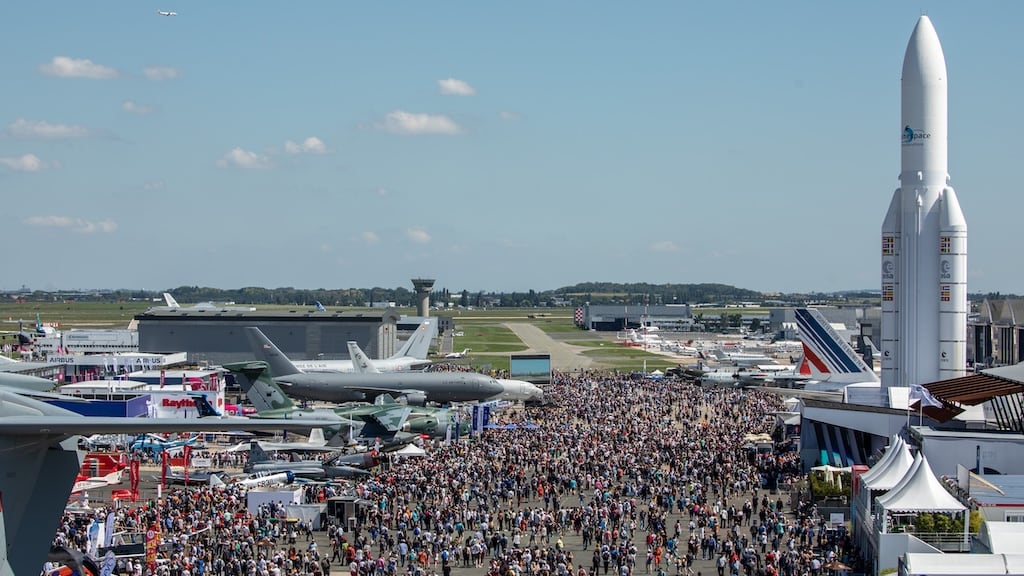
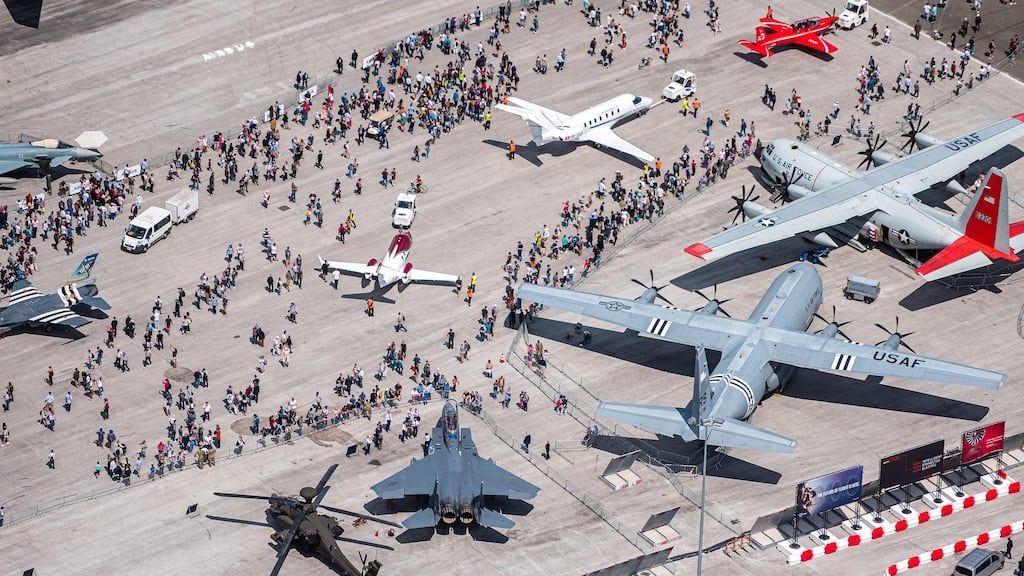
Military transports, such as the A400M, often add to the drama with demonstrations like tactical landings and paratrooper drops. On the ground, the static display park hosts over 150 aircraft, allowing visitors an unparalleled opportunity to get up close with the latest models from giants like Airbus and Boeing, alongside military hardware, sleek business jets, and historic planes. Spanning over 125,000 square meters, the indoor exhibition halls house some 2,500 exhibitors from nearly 50 countries, showcasing every conceivable component of the aerospace supply chain—from engines and avionics to advanced materials and satellite systems. Beyond the hardware, the show is a hub for forward-thinking initiatives.
The Paris Air Lab is a dedicated space for research and innovation, focusing on critical future topics like decarbonization and artificial intelligence. The Start-Me-Up Zone connects established industry players with hundreds of dynamic startups, while the Avion des Métiers (Careers Plane) serves as a vital bridge, offering thousands of jobs and internships to inspire and recruit the next generation of aerospace talent.
Traditional Customs
While not a festival of ancient rituals, the Paris Air Show has developed its own powerful set of modern traditions that define the industry's culture. These customs are the unwritten rules that govern the flow of business, competition, and innovation. The most significant of these is the art of the deal announcement. During the professional days, a carefully choreographed series of press conferences takes place, where manufacturers and airlines unveil orders for hundreds of aircraft, often valued in the tens of billions of dollars.
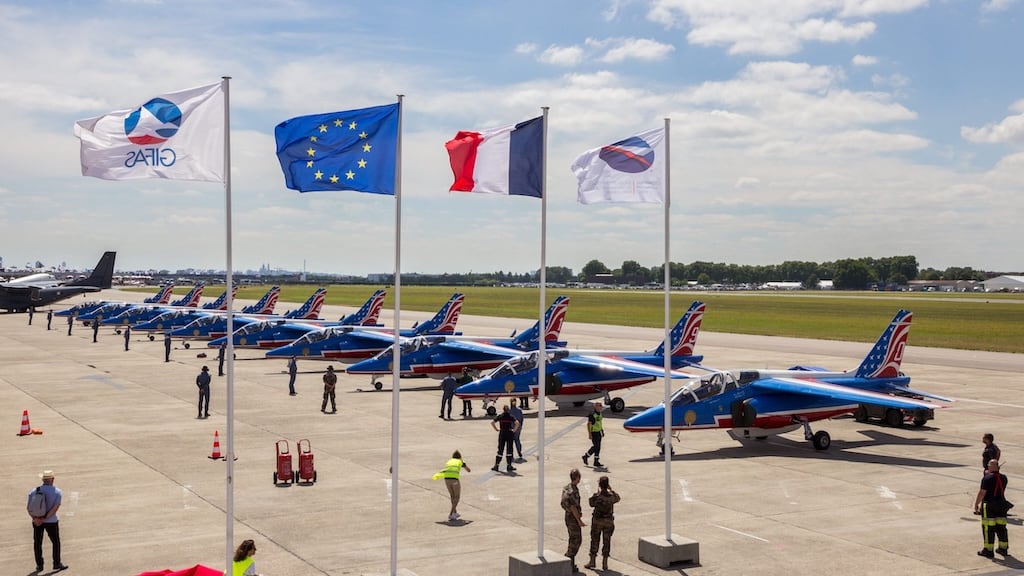
These announcements are more than mere transactions; they are public declarations of confidence that serve as a barometer for the entire industry's economic health. A blockbuster order can create market momentum and influence stock prices. This leads to another core custom: the culture of intense but professional rivalry. The show floor and the skies above are a competitive stage, a tradition dating back to fly-offs like the one between the American YF-16 and the French Mirage F-1E in 1975. The event is also a profound expression of national pride, reflecting one of the most cherished Traditional customs in France: a deep respect for engineering excellence and savoir-faire. The show's organization by GIFAS, the inauguration by the French President, and the iconic flypast by the Patrouille de France aerobatic team all underscore its importance as a symbol of French industrial and technological leadership.
What to Expect
Attending the Paris Air Show requires planning to make the most of the vast and exhilarating experience. The event is clearly divided into Professional Days, which are reserved for accredited industry members for networking and business, and Public Days, when the gates open for enthusiasts and the general public to witness the spectacle. Tickets should be purchased well in advance from the official Siae website to avoid long queues.
June weather in Paris can be unpredictable, so dressing in layers is wise. However, comfortable walking shoes are non-negotiable, as the exhibition grounds are immense. Sunscreen, a hat, and sunglasses are essential for watching the hours-long outdoor flying displays. Navigating to the venue is a key part of the plan. While driving via the A1 motorway is an option, visitors should anticipate severe traffic congestion and must pre-book parking. The most reliable method is public transport, using the RER B train to 'Le Bourget' station, followed by Bus 152 or a dedicated shuttle.
Taxis and rideshares are convenient but can be expensive and may face restricted access. Accommodations should be booked months in advance, as hotels across the Paris region fill up quickly. For convenience, consider hotels in the Grand Roissy area near Charles de Gaulle Airport or along the RER B train line for direct access. For an optimal experience, download the official mobile app for the latest schedules, bring a portable power bank, and stay hydrated.
Conclusion
The Paris Air Show in France is far more than a collection of aircraft on a runway. It is the crucible where the future of the aerospace industry is debated, designed, and forged. As an economic engine, it generates billions in sales and supports over a thousand jobs with each edition, demonstrating its tangible impact. As a technological showcase, it unveils the innovations that will define how we travel, explore, and defend ourselves in the decades to come. The show's enduring relevance lies in its ability to evolve.
The event that once celebrated the dawn of the jet age is now the primary forum for tackling the industry's greatest challenge: creating a sustainable future for aviation. Discussions and displays are increasingly focused on Sustainable Aviation Fuels (SAF), hydrogen propulsion, and electric flight, charting a course toward a greener sky.
To attend the Paris Air Show is to witness this incredible convergence of history and destiny firsthand. It is an invitation to look up in wonder and see the future taking flight, a journey that can begin by securing tickets for the next generation of dreamers.