Corpus Christi in Europe
Lively Corpus Christi Celebrations in Europe
Celebration is a part of European cultures that represents the vast history, diversity, and tradition of the continent. Among many important days, Corpus Christi is one of the significant feasts originating from Christianity, relating to the Holy Eucharist. The day is observed with unique festivals across various European countries, each reflecting the local culture and religious fervor.
Historical Significance of Corpus Christi
Corpus Christi, popularly known as the Feast of the Body and Blood of Christ, falls on a Thursday after Trinity Sunday. The holiday has its origins in the 13th century and was instituted by Pope Urban IV in 1264.
This feast is principally intended to pay tribute to the Eucharist, the central component of the Christian faith that symbolizes the body and blood of Jesus Christ. Over time, Corpus Christi has transformed to include elaborate processions, decorations, and communal gatherings.
Celebrations Around Europe
🇪🇸 Spain: Canary Islands
- Name of Celebration: La Orotava Corpus Christi Festival
- Country and Region: Spain, Canary Islands
- Typical Activities: The highlight is the procession with the Eucharist, during which participants follow along dressed in traditional costumes. Music and dancing are integral parts of the celebration, while local food adds to the festive atmosphere.
- Interesting Facts: The sand for the carpets comes from volcanic sands from Mt. Teide, giving the artwork a unique touch.
La Orotava is known for its stunningly beautiful sand and flower carpets designed and constructed by local artists and residents. These carpets decorate the streets and become the path for the religious procession.
🇵🇱 Poland: Łowicz
- Name of Celebration: Corpus Christi Procession in Łowicz
- Country and Region: Poland, Łowicz
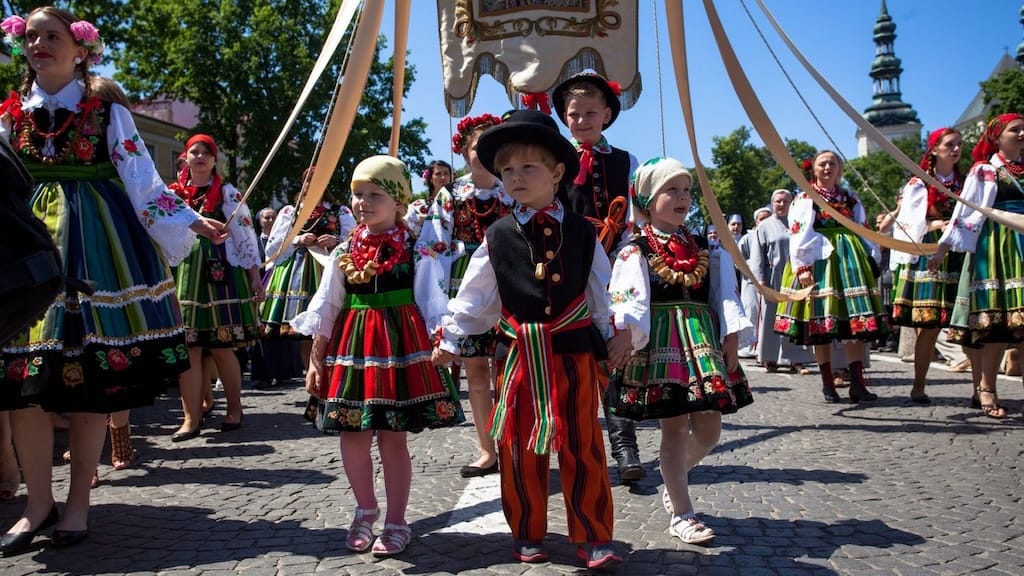
- Typical Activities: Participants, dressed in striking regional costumes, move along carrying religious banners and icons. The streets are adorned with flowers and altars.
- Interesting Facts: This Łowicz procession is a UNESCO-recognized cultural heritage event, showcasing Poland's rich folk traditions.
The Łowicz procession is a colorful display of folk dress and elaborately decorated objects, deeply rooted in Polish culture and dating back centuries.
🇵🇹 Portugal: Póvoa de Varzim
- Event Name: Festa do Corpo de Deus
- Country and Region: Portugal, Póvoa de Varzim
- Typical Activities: The event features a procession where streets are entirely carpeted with flower petals.
- Interesting Facts: The celebration typically includes a ritual "blessing of the sea," where fishermen's boats are blessed for safe journeys.
The Feast of Corpus Christi in Póvoa de Varzim links religious tradition with the town's strong maritime vocation.
🇦🇹 Austria: Salzburg
- Name of Celebration: Fronleichnam
- Country and Region: Austria, Salzburg
- Standard Activities: The procession includes religious officials, civic leaders, and the public walking through the city streets with music and traditional dress.
- Interesting Facts: The procession ends at the Salzburg Cathedral, where a special Mass is held in honor of the Eucharist.
In Salzburg, Corpus Christi is celebrated with a grand procession preserved since the Middle Ages, set against the city's baroque architectural backdrop.
🇮🇹 Italy: Orvieto
- Celebration Name: Corpus Domini
- Country and Region: Italy, Umbria
- Common Traditions: The highlight of the celebration is the procession carrying the sacred relic through the streets of Orvieto, led by local clergy and joined by the laypeople.
- Interesting Facts: The cathedral façade is covered with detailed mosaics depicting scenes from the Bible, making it the focal point of the procession.
Orvieto holds a special place in Corpus Christi history, as it was here that Pope Urban IV instituted the feast in 1264. The city's cathedral contains the relic of the Eucharistic Miracle of Bolsena.
Conclusion
Corpus Christi celebrations throughout Europe showcase the continent's rich cultural tapestry and strong, deep-rooted traditions that unite people. These events not only display religious beliefs but also foster a sense of unity and cultural identity.
Each celebration offers a unique perspective: from the intricate sand carpets in La Orotava to the vivid folk costumes in Łowicz. Participating in or observing these festivities allows one to appreciate the traditions and values that shape European communities, making Corpus Christi an enriching cultural experience.