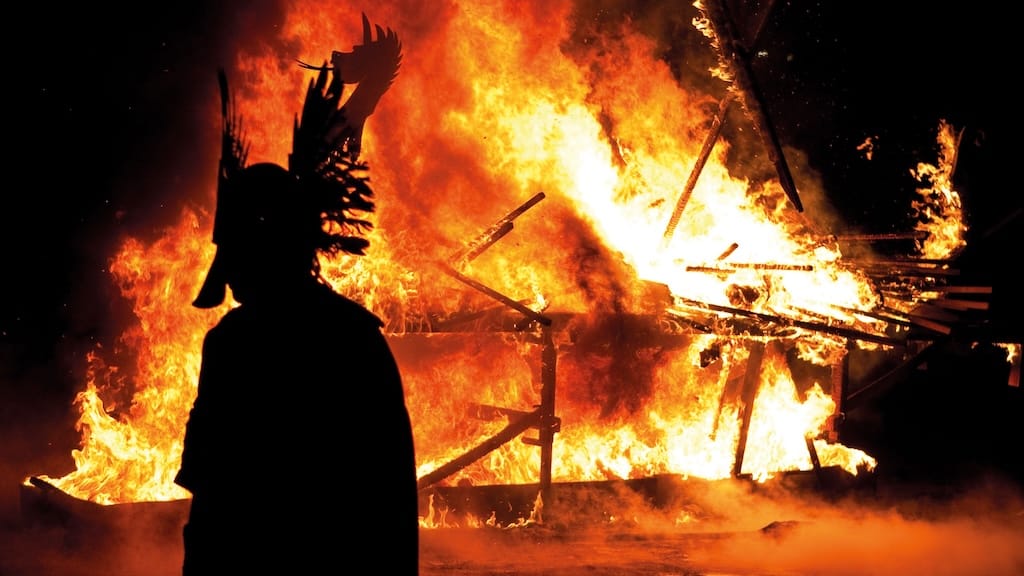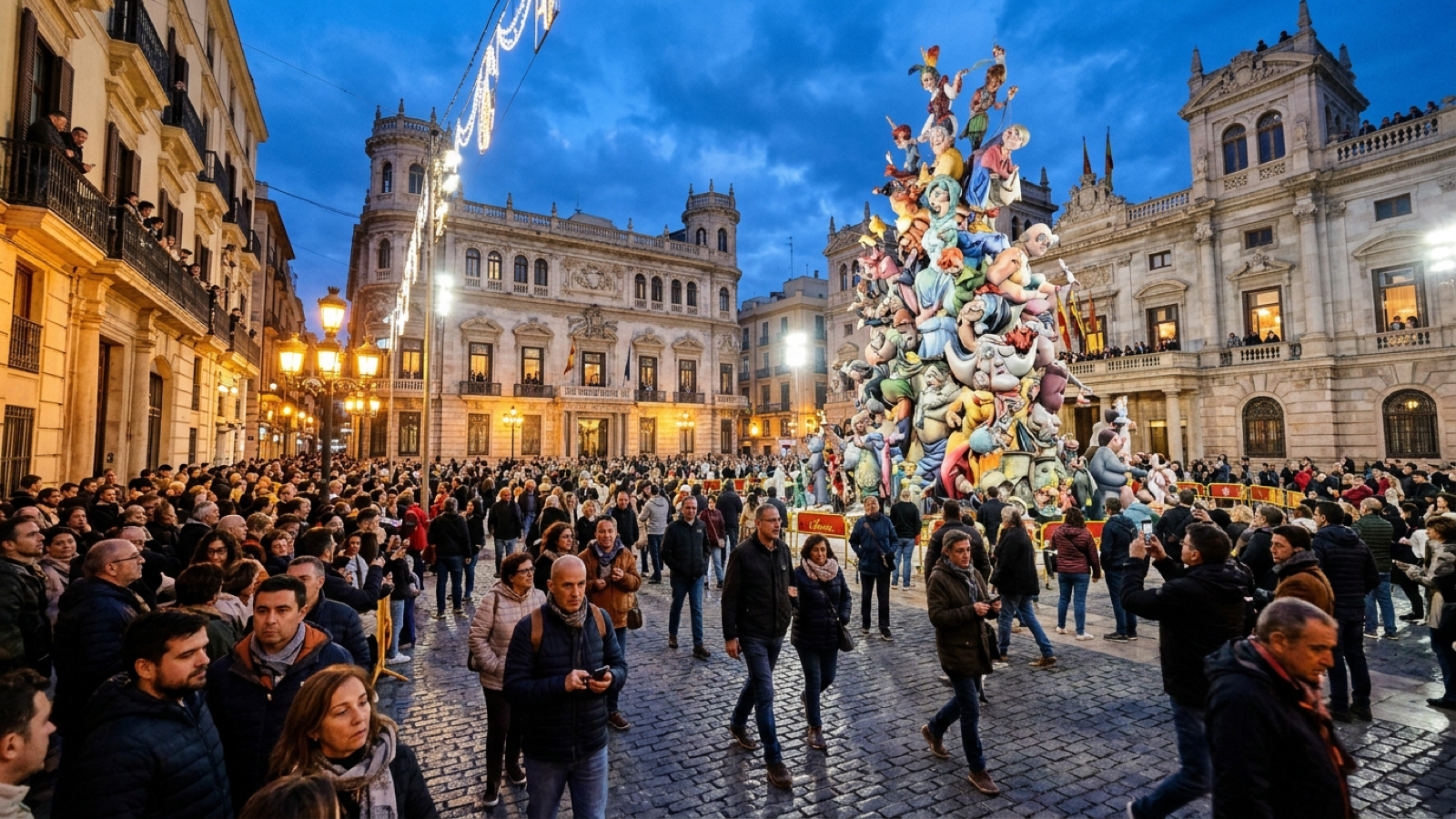
Inscribed by UNESCO in 2016, Valencia's Las Fallas ends every 19 March with La Cremà, when hundreds of satirical wood-and-foam monuments are burned across the city in one night.
Las Fallas 2027 reaches its main five-day climax from 15 to 19 March 2027 in Valencia, Spain, concluding on the Feast of Saint Joseph with the overnight burning of hundreds of monumental sculptures across the city. While those final five days cover La Plantà through La Cremà, the broader festival calendar published by Visit Valencia (opens in a new tab) opens with the Crida announcement at the Serranos Towers on 28 February 2027, followed by daily midday pyrotechnic displays from 1 to 19 March 2027. Street viewing of the monuments and pyrotechnics is free.
Origins and UNESCO recognition
Inscribed on the UNESCO Representative List of the Intangible Cultural Heritage of Humanity (opens in a new tab) in 2016, Las Fallas grew out of a medieval Valencian carpenters' custom of clearing workshops at the end of winter by burning scrap wood and old candle-holding planks (parots) on the eve of Saint Joseph's Day. Over time, neighborhoods dressed those wooden frames in old clothes and added satirical signs mocking local figures, evolving into the modern artistic monuments built by professional sculptors and neighborhood commissions (casals fallers).
Today, neighborhoods across Valencia erect both an adult falla and a smaller children's falla (falla infantil). The largest Special Section monuments tower several stories high and satirize politics, celebrity culture, and current events with detailed painted scenes around their bases.
Key events during Las Fallas week
From 1 to 19 March, the Plaza del Ayuntamiento hosts a daily Mascletà at 14:00. Rather than relying on colored skybursts, a mascletà is a daytime rhythmic composition of firecrackers and aerial salutes built around escalating acoustic shockwaves that shake the surrounding buildings.
On the night of 15 March, crews complete La Plantà, finishing the installation of every monument before the jury tours the city on the morning of 16 March. On 17 and 18 March, tens of thousands of falleros and falleras in 18th-century silk brocade dresses and traditional jackets walk in the Ofrenda de Flores, carrying carnations to build a towering floral mantle around a wooden effigy of the Virgin Mary in Plaza de la Virgen.
Late on 19 March, the festival closes with La Cremà. Children's monuments are lit first around 20:00, neighborhood adult monuments follow from 22:00, and the municipal monument in Plaza del Ayuntamiento burns last around 23:00 under the supervision of city fire brigades.
Practical tips for visitors
Most neighborhood fallas stand free on public streets and squares. A small number of top-tier Special Section monuments place fencing around their bases and charge a modest entry fee for close-up access inside the perimeter.
During the Mascletà at Plaza del Ayuntamiento, arrive at least 45 to 60 minutes before 14:00 for a clear sightline, and stand clear of tight bottlenecks if you dislike intense noise. Pack comfortable walking shoes, as many central streets close to buses and taxis between 15 and 19 March. Keep a light layer for cool evenings and carry cash or a card for churros and hot chocolate sold at street stalls on nearly every corner.
Getting to Valencia and where to stay
Valencia Airport (VLC) connects to hubs across Europe and sits about 20 minutes from the city center on Metrovalencia lines 3 and 5. High-speed AVE and Iryo trains link Madrid Chamartín and Madrid Atocha to Valencia Joaquín Sorolla in roughly two hours, while Euromed rail services run south along the coast from Barcelona.
Hotel rates peak sharply between 15 and 19 March. Compare Valencia accommodation (opens in a new tab) several months ahead, and check neighborhood locations carefully: staying in Ciutat Vella, Ruzafa, or El Carmen puts you steps from major monuments and late-night street parties, whereas quieter districts near Turia Gardens or Benimaclet offer easier sleep while keeping central plazas within a 20-minute walk or metro ride. Travelers exploring Spain's spring and summer calendar can also compare Valencia with Seville's spring fairs, Barcelona's La Mercè in September, or nearby Buñol's La Tomatina in August.
Frequently asked questions
When are the main days of Las Fallas 2027?
The core five days run from Monday, 15 March to Friday, 19 March 2027, though daily Mascletàs begin on 1 March after the Crida opening on 28 February.
Do I need tickets to see Las Fallas in Valencia?
No. Watching the daily Mascletà, walking past street monuments, and attending La Cremà on 19 March are free, with optional small fees only for entering the inner fencing of select Special Section monuments.
When does La Cremà happen on 19 March?
Children's fallas burn first around 20:00, adult neighborhood monuments begin burning from 22:00, and the Plaza del Ayuntamiento monument burns last around 23:00.
Public holidays around the festival
Public and bank holidays in Spain from 3 days before to 3 days after the festival ().
Shops, banks and transport should keep their normal timetable.
Editions
- 2027In 4 months